
24/06/2026

Case study
Digital transformation
Digital Revolution in Logistics for CSL
24/06/2026
How CSL World was created - a digital ecosystem for comprehensive logistics operations, with AI at the heart of the process.
CSL Sp. z o.o., headquartered in Szczecin, is one of the most recognized companies in Poland’s transport, forwarding, and logistics sector. Founded in 1998, the company supports the full supply chain - from sea and land freight forwarding, through port operations, to customs clearance - operating across key Baltic ports, including Szczecin, Świnoujście, Gdynia, and Gdańsk, as well as Hamburg.
CSL: logistics ahead of its time
A few years ago, CSL’s management board made a strategic decision: to move beyond existing operating models and build logistics that stay ahead of their time. This decision evolved into the vision of CSL World - a digital logistics ecosystem built according to the CSL® standard, designed to connect customers, carriers, warehouse operators, customs agents, and partners within one collaborative network. CSL Group’s vision is clear: by 2033, to become a global benchmark for innovation in logistics.
The first fundamental step toward this vision was to build a modern logistics ecosystem from the ground up - a project delivered by CSL together with Hycom and technology partner Otimo.
The challenges facing CSL
CSL’s existing TMS had served the company well for years. However, as the business grew dynamically and customer expectations continued to rise, the need for a solution capable of supporting new ambitions became increasingly clear. Some processes still had to be handled outside the system - in Excel and Google Sheets. In practice, this created several operational challenges:
Manual processes and a high risk of errors. Orders were received by email, FDL and XML documents were compared manually, and carriers were selected in spreadsheets. This generated operational costs and increased the likelihood of mistakes.
Lack of integration between systems and partners. Data was fragmented, while information exchange between CSL, customers, carriers, and port operators took place mainly via email.
No dynamic route optimization or fleet management. Transport selection and carrier assignment required manual analysis of available options. This made it difficult to compare fleet availability, vehicle location, payload capacity, and loading ramp schedules in real time. As a result, carrier selection was not always optimal from a cost, time, or operational perspective.
Complex logistics processes. Sea freight, land freight, port operations, and customs clearance are four different operational worlds. In day-to-day work, they all need to come together seamlessly within one supply chain - without teams constantly switching between systems.
From challenge to concept: the road to CSL World
CSL works with demanding customers for whom service quality is the highest priority. As this cooperation expanded, the volume and intensity of information exchange between business partners increased significantly. Data security, accuracy, and operation within one consistent system became critical. This approach not only saves time but also enables direct and faithful 1:1 information transfer between all parties involved.
The starting point was an in-depth analysis of CSL’s operational processes - from order receipt, through transport planning and port coordination, to customs clearance and settlement. Hycom’s team spent dozens of hours in workshops with sea freight forwarders, land freight forwarders, port operators, and customs agents, mapping every process step, every document, and every decision point.
At the same time, we examined the "old habits" shaped by the previous system - both what worked well and what slowed teams down. Some processes simply had to be transferred into a modern tool. Others required a fundamental redesign, sometimes against existing habits. The role of Hycom’s analysts and designers was not only to listen, but also to recommend changes that could deliver measurable operational value.
Out of this work emerged the concept of the CSL World forwarding platform, based on five key assumptions:
One working environment for all roles - sea freight forwarders, land freight forwarders, port operators, and customs agents - putting an end to fragmented data across emails and spreadsheets.
Automation where it makes sense - using AI for document processing and n8n for process orchestration.
Transport optimization based on hard data - instead of intuition and manual calculations.
Openness to future development and integrations - CSL World was designed as the foundation of an ecosystem, not a closed island.
Independence and full ownership of the solution - with CSL owning the system and controlling its further development.
The choice of technology - TypeScript and React, n8n, OpenAI, PostgreSQL, Microsoft Azure, and the Otimo Optimizer - followed five clear criteria: security, independence, scalability, ease of integration, and optimization power based on world-class algorithms.
Together with Hycom.digital and Otimo, we have created the architecture of the future: a strategy and roadmap for implementations that not only automate processes but also create a new model of work—one that is predictable, integrated, and accessible from anywhere. We’re not building a system. We’re building a new way for global supply chains to operate.

CSL World digital ecosystem: what we built
Hycom designed and implemented CSL World - an integrated, web-based digital ecosystem that replaced a fragmented set of tools and manual processes with one consistent working environment.
The ecosystem covers four key roles: sea freight forwarder, land freight forwarder, port operator, and customs agent.
Sea freight forwarding.
Creation and management of forwarding documentation based on Preliminary List and FDL files. Automatic validation and comparison of documents using AI. Email integration through IMAP and automated attachment processing. Cargo register, discrepancy handling, and grouping of cargo items.
Land freight forwarding.
Planning and management of land transport, appointment scheduling, order status monitoring, and dynamic carrier allocation based on the Otimo Optimizer.
Port operations.
Management of port operations and appointments, support for processes before and on the loading day, and coordination with the Euroterminal system.
Customs agency.
Management of customs clearance orders, customs agency folders linked to cargo and documents, handling of multiple cargo items within a single customs declaration, and blocking of transport document generation until all customs clearance processes are completed.
Reporting and operational dashboard.
A real-time view of transport statuses, reports and statistics based on flexible filters, as well as alerts and notifications for forwarders.
Administration and security.
User, role, and permission management, branch configuration, two-factor authentication with Google Authenticator, and flexible configuration of appointments, optimizer settings, finances, and checklists.
System integrations
From the beginning, CSL World was connected with key elements of the broader CSL ecosystem, allowing operations to run within one structured environment. The system handles email communication automatically - retrieving messages, analyzing attachments, and placing them directly into the logistics process. It also verifies carriers in public registers on an ongoing basis, helping CSL avoid cooperation with unreliable companies. This is complemented by integration with the port operator’s system, enabling terminal operations to be handled efficiently and without unnecessary manual work. In practice, this means fewer clicks, fewer errors, and a much faster flow of information between all participants in the process.
The platform architecture was designed with openness to future integrations in mind - including customer systems, logistics partners, carrier telematics, and customs systems. These integrations are planned for the next stages of CSL World development.
AI at the center of the platform
One of the key differentiators of CSL World is the deep integration of artificial intelligence into day-to-day logistics processes. AI is embedded directly into the forwarder’s workflow - it is not just a fashionable add-on.
OpenAI models - GPT-4o-mini, supported in selected cases by GPT-5 mini - automatically:
extract data from PDF files in FDL format, converting unstructured documents into structured JSON data;
compare different document versions, detecting discrepancies between FDL and XML files;
identify missing information and potential errors in documentation;
assign documents to the correct folders and cargo items;
process documents in both text and image formats using a hybrid approach.
This automation eliminates hours of manual work and reduces the risk of errors. Instead of reading and comparing documents field by field, forwarders receive a ready-made summary with flagged discrepancies.
Otimo Optimizer: world-class algorithms
The decision-making engine at the heart of CSL World is the Otimo Forwarding Optimizer - a component embedded in the platform that automatically selects optimal carrier-route pairs for each order.
The algorithm performs multi-criteria optimization, taking into account:
available fleet and its parameters, including payload capacity, location, and readiness time;
carrier prices and route preferences;
quality ratings of cooperation with carriers, including load balancing;
pickup time windows, port ramp limits, and warehouse working hours;
cargo weight and specifications.
Otimo is a team of scientists and software engineers whose algorithms compete globally with solutions created by technology giants. For CSL, this means a competitive advantage built directly into the system’s foundation - every forwarder has access to an enterprise-class decision engine that has so far been available mainly to the largest operators.
Technology and architecture
CSL World was designed as a modern, scalable ecosystem of cloud-based web applications running on Microsoft Azure. The technology stack was selected according to five criteria: security, independence, scalability, ease of integration, and optimization capabilities.
Production and test environments are logically separated, ensuring deployment stability. Two-factor user authentication and full control over data are standards we built into the platform’s foundation.
Project approach: a new opening
The CSL World project was a deliberate decision by Hycom to work in a new delivery model: faster, more agile, and deeply supported by AI at every stage of the process. Within 9 months from kick-off to GoLive, we built and implemented a complex platform that replaced a long-standing TMS system.
Analysis and prototyping
An analyst must understand the client, build trust, and propose a solution. Hycom’s approach was to create a prototype at a very early stage - one that later became the foundation of the entire implementation. The prototype allowed the client to see the solution, not just read about it. This radically shortened decision-making iterations.
Implementation
The implementation itself took 19 weeks. Functional analysis and workshops were run in parallel with iterative development, which required independence and initiative from the entire team. This approach moved away from the traditional "analysis → design → coding" model, where each phase waits for the previous one to close.
Shadowing
For 8 weeks, CSL and Hycom teams worked in parallel across two systems - the new CSL World platform and the existing TMS. This approach enabled practical verification of every process under production conditions, gathering feedback from forwarders and implementing improvements before the official launch. As a result, GoLive took place without migration panic. The CSL team knew the system, trusted it, and understood its advantages.
AI in the project team’s work
This time, at Hycom, we used AI not only as a product component, but also as a tool supporting the project team’s work. The key conclusions we observed were:
Responsible use of AI accelerates coding and prototyping.
AI works well as an assistant - it does not replace senior expertise, but strengthens productivity.
Knowledge and experience in understanding the client’s problem remain critical - AI cannot replace them.
Building such an advanced system requires full trust on both sides. The most difficult stage is finding the right partners to cooperate with. We decided on a new, more agile delivery model with the supplier - based on a prototype instead of months of specification, with parallel analysis and implementation, and work in a shadowing model. Only this approach made it possible to create tools that met our high expectations. The decision proved right - we were not disappointed. The ecosystem that was created is intuitive and highly automated.
Implementation results
The implementation of CSL World replaced work across several systems and scattered spreadsheets with one consistent working environment for the entire forwarding department.
The project proved that even in a highly specialized industry such as forwarding and port logistics, it is possible to implement a complex system quickly and agilely, with intensive use of AI. The key success factors were an early-stage prototype, a methodical workshop approach, the shadowing model, and close cooperation with the CSL team.

9 months
From kick-off to GoLive
4 roles
Within one platform: sea freight forwarding, land freight forwarding, port operations, and customs agency
AI + Otimo
At the center of the platform - document automation and transport optimization
8 weeks of shadowing
Parallel work on the old and new systems before GoLive
What’s next: the vision for CSL World development
As Przemysław Hołowacz emphasizes: "CSL World is only the first step - and its potential reaches much further than what we can see today." Together with CSL, we are already working on the next steps. Planned for this year are:
Track & Tracing system - an application enabling CSL and its customers to track transports in real time, with dedicated panels for carriers and customers, integrated with telematics systems.
Expansion of CSL World to support containers - extending functionality with dedicated processes for sea freight forwarding.
Full support for documents and invoices - automation of the financial and document workflow at the end of the logistics cycle.
In the following stages, we also see increasingly deep use of artificial intelligence in the daily work of forwarders, customs agents, and port agents. CSL World is growing in line with CSL’s vision - toward a global, scalable ecosystem that transforms logistics and leads CSL Group toward becoming a global benchmark for innovation in logistics by 2033.
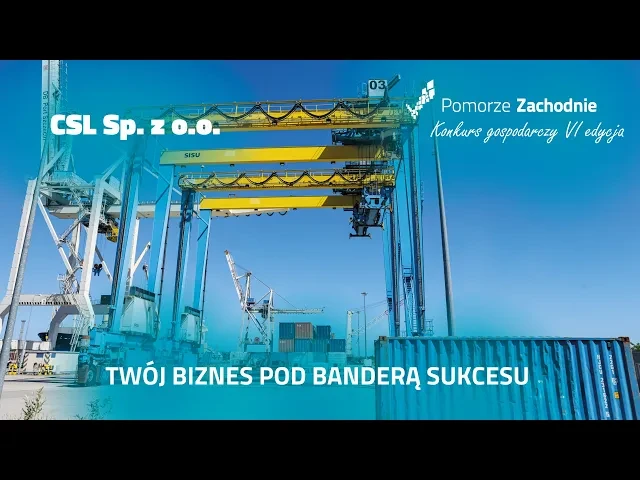
Watch CSL’s video about the beginning of this story.

Maximize your IT solutions? Schedule a free consultation today!